I recently bought a shirt from a locally based fashion designer made out of kanga material.
These were the care instructions that accompanied this purchase:
1. Wash in hands in 30C.
2. Don't mix with other clothes.
3. Don't leave on sun for too long.
4. Iron in medium temperature.
March 21, 2011

March 18, 2011
Swimmers.
Our new house is big and accordingly there are a lot of big, empty white walls, begging to be filled with color, or something, anything. That was task #1 in the new house - finding a hammering and putting some things on the walls. Luckily, we had recently purchased two new pieces of art that we were keen to display.
The artist is Miguel Costales. He is Spanish. He has a charming accent and adorable dimples to match. He is humble and simple. He exudes a sense of coolness and confidence that kind of makes you want to be friends with him and chat for hours over a beer.

 Miguel is inspired by the beach and natural objects. The result is art that feels intimately connected to the Swahili Coast.


 We bought two of his swimmers, but continue to be inspired by many of his other water colors and carved objects.


 Dar-based folks, some of his pieces are still on sale at Makutano House, otherwise you can contact him directly and perhaps even visit his studio in Mbezi Beach, or else karibu kwetu to enjoy his art.
The artist is Miguel Costales. He is Spanish. He has a charming accent and adorable dimples to match. He is humble and simple. He exudes a sense of coolness and confidence that kind of makes you want to be friends with him and chat for hours over a beer.


March 17, 2011
Nostalgic for St. Patrick's Day.
I heard the entire city of Chicago went on a bender last weekend, as is typical this time of year in commemoration of St. Patrick's Day. Something about wearing green and drinking copious amounts Irish spirits usually proves a recipe for disaster, as I have witnessed firsthand several years over along the green river.
I cant say I wish I was there among them, but I must admit that I am feeling extremely nostalgic for St Patrick's Day celebrations this year. Perhaps it is just a wishful diversion from work, but something doesn't feel quite right about letting this day go by without the standard fare of a draught guiness, corned beef and cabbage and some soda bread.
So in the spirit of St. Patrick's Day and also in celebration of my mom's birthday, I share an innovative recipe that you can count on to get your annual fix of Irish soda bread.

I cant say I wish I was there among them, but I must admit that I am feeling extremely nostalgic for St Patrick's Day celebrations this year. Perhaps it is just a wishful diversion from work, but something doesn't feel quite right about letting this day go by without the standard fare of a draught guiness, corned beef and cabbage and some soda bread.
So in the spirit of St. Patrick's Day and also in celebration of my mom's birthday, I share an innovative recipe that you can count on to get your annual fix of Irish soda bread.

Beta Testing the Our New Toy.
Our novice attempts at mastering the grill resulted in this somewhat obscene picture:
But we couldn't argue with the results. It was delicious. For those among you perverse enough to be inspired by this picture head here.

But we couldn't argue with the results. It was delicious. For those among you perverse enough to be inspired by this picture head here.

March 16, 2011


Alpenglow in the Rock City.
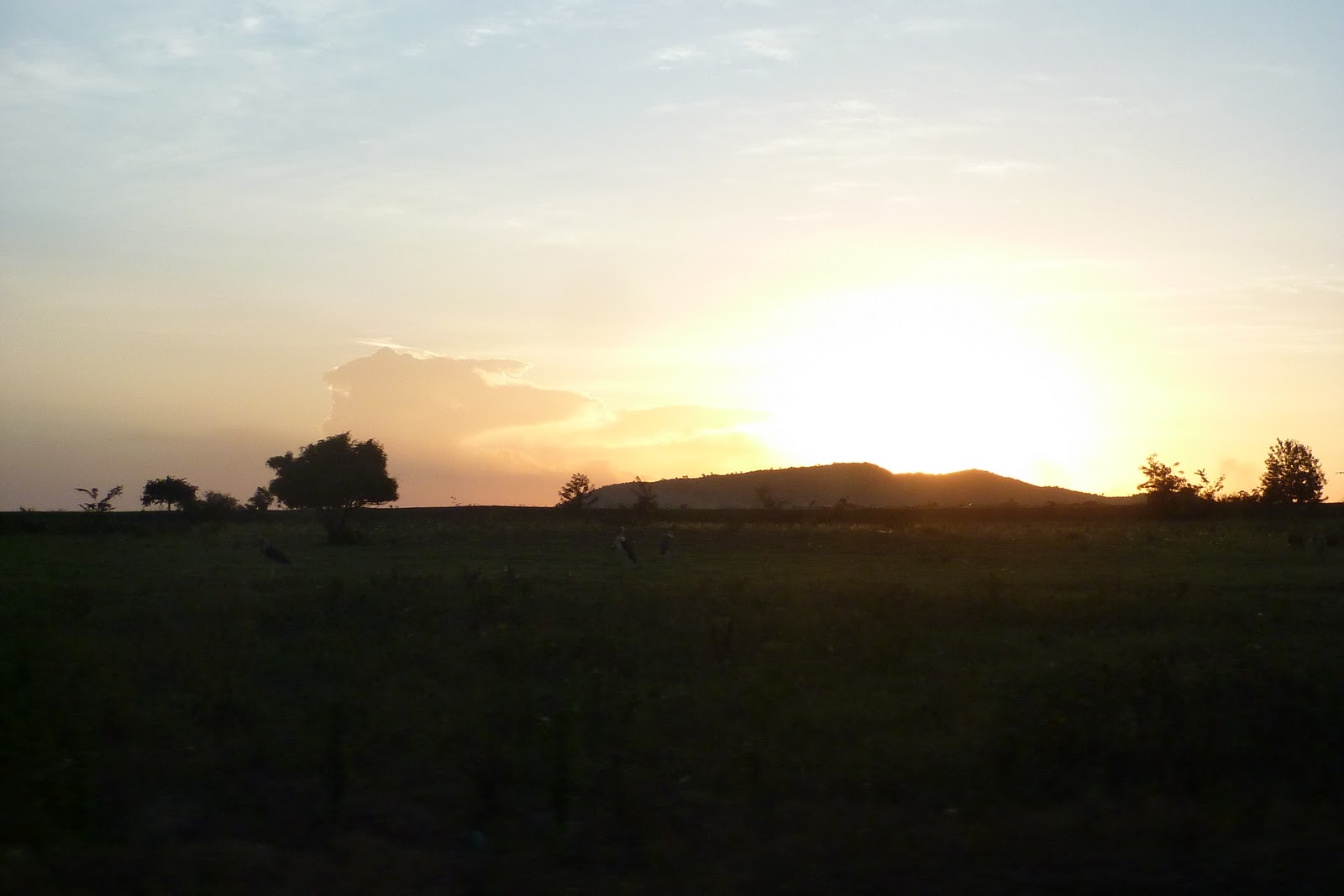
Immediately following our recent move into our new house, I departed for Mwanza aka Tanzania's Rock City. Some aspects of this trip proved a welcome distraction from the hustle of our recent move, including awesome sunsets and alpenglow over Lake Victoria and the rock city.




March 8, 2011

March 3, 2011
Goodbye Cottage, Hello Change.
Two weeks ago today, we received news that we were going to be kicked out of our house in Dar.

This news struck me like a load of bricks. We had finally managed to kick out an oh so dreadful roommate. For the first time in our married lives we were going to have a place to call our own. We had pored love and attention into this cute little cottage full of potential to make it feel like a home. Things were looking up, excitement was in the air.
As if this news was not disappointing enough, Andrei was traveling in the Democratic Republic of Congo and I was scheduled to be in Mwanza aka the "Rock City" the day our lease was slated to expire. I pleaded for an extra week's stay in the house so that Andrei could be part of the decision-making process, and so that he could be here in person to help with packing and moving. No dice. In lieu of a renewed lease, or even a helpful compromise, the owner was sending in a wrecking ball. And these plans could not be delayed, even by a mere three days. I guess there is no room for delay when there is money to be made. The average rent in our neighborhood in Dar is approximately $4000/ month, far more than what we were paying for this little humble house. With green eyes, she could not muster any empathy towards my situation. I wish her all the best with these untempered dreams.
I spent a couple of days absorbing the impact of this news and mourning the loss of the place that we had learned to call home, even throwing out some rather idle threats to Andrei that I was going to book a one way flight out of here, and he could meet up with me whenever he so chooses, wherever that may be....um, right!? Very mature, Matty.
After spending sufficient time licking my wounds, I finally took up a broker who told me anything he thought I wanted to hear until I wrote a check, a big fat one, in fact. I toured seven places around Dar es Salaam, each one more depressing than the next. He finally convinced me to push our budget up by a very minor amount so that he could prove to me just how far that minor extra amount would buy up for us. I felt I was walking into a trap, until his promises did not fall flat.
And with that we have inherited a new little house to call home. Ok, its not so little, but it comes with an awesome garden, where Andrei and I can take up one of our favorite past times - gardening and entertaining. While our house will probably look something like this over the coming weeks as we get settled, I promise more pictures as things come together.


This news struck me like a load of bricks. We had finally managed to kick out an oh so dreadful roommate. For the first time in our married lives we were going to have a place to call our own. We had pored love and attention into this cute little cottage full of potential to make it feel like a home. Things were looking up, excitement was in the air.
As if this news was not disappointing enough, Andrei was traveling in the Democratic Republic of Congo and I was scheduled to be in Mwanza aka the "Rock City" the day our lease was slated to expire. I pleaded for an extra week's stay in the house so that Andrei could be part of the decision-making process, and so that he could be here in person to help with packing and moving. No dice. In lieu of a renewed lease, or even a helpful compromise, the owner was sending in a wrecking ball. And these plans could not be delayed, even by a mere three days. I guess there is no room for delay when there is money to be made. The average rent in our neighborhood in Dar is approximately $4000/ month, far more than what we were paying for this little humble house. With green eyes, she could not muster any empathy towards my situation. I wish her all the best with these untempered dreams.
I spent a couple of days absorbing the impact of this news and mourning the loss of the place that we had learned to call home, even throwing out some rather idle threats to Andrei that I was going to book a one way flight out of here, and he could meet up with me whenever he so chooses, wherever that may be....um, right!? Very mature, Matty.
After spending sufficient time licking my wounds, I finally took up a broker who told me anything he thought I wanted to hear until I wrote a check, a big fat one, in fact. I toured seven places around Dar es Salaam, each one more depressing than the next. He finally convinced me to push our budget up by a very minor amount so that he could prove to me just how far that minor extra amount would buy up for us. I felt I was walking into a trap, until his promises did not fall flat.
And with that we have inherited a new little house to call home. Ok, its not so little, but it comes with an awesome garden, where Andrei and I can take up one of our favorite past times - gardening and entertaining. While our house will probably look something like this over the coming weeks as we get settled, I promise more pictures as things come together.


Mamma Mia.

Those of you that will not be able to attend will have the opportunity to watch this event live: Via www.mustafahassanali.net at 1600hrs East African Time. Karibu wote!
February 23, 2011


February 19, 2011
Piracy on the High Seas.
We see it, hear about it, and feel it in our daily lives. The reach of the Somali pirates is hitting closer and closer to home, as they grow more and more powerful.
Recently, a BBC international news headline read: Greek oil supertanker Irene hijacked off Oman. Frankly, you do not need too wild of an imagination to guess that it is the Somali pirates behind this ship seizure. Carrying 266,000 tons of crude oil with an estimated value of $200 million, it is believed this is the largest vessels ever seized by Somalis.
Today, four Americans sailing on a yacht off the coast of Oman were taken hostage by Somali pirates. While pirates usually attack cargo ships, in more recent years it has become increasingly common that they now seize yachts as well. The yacht's owners had been sailing around the world since 2002, apparently on a Bible hand out mission.
Overstretched international anti-piracy forces operating in the Indian Ocean give priority to protecting cargo ships over private yachts. We have an acquaintance here who runs an anti-pirate private security firm. Basically, if you have something you want to transport, he hires mercenary types to board your boat and help keep you safe from the pirates. Right now - business is booming. When I pointed out his rather perverse implications behind this business model, he demurely agreed.
But the story hitting closest to home began four months ago now and is still unfolding. Two people whom we know from the Dar es Salaam were kidnapped off of Mtwara in South Tanzania. They were sailing home to South Africa to spend the holidays with their families; they had volunteered to work as crew on someone else's yacht. The stories about the circumstances under which their yacht was seized are murky, but either way, the result is tragic. Two South Africans from very humble backgrounds are now being held for ransom by Somali pirates. The initial ransom price was set at $10,000,000, an astronomical sum by all accounts. Apparently, their families are bargaining for their release, while at the same time begging for contact to make sure that the person they are dealing with can assure that their loved ones are safe, hell, even alive for that matter.
We recently learned that negotiation proceedings were beginning to reach a formative end, and to help ensure that these negotiations were brought to a positive end we were asked to contribute a rather modest amount, approximately $10US to support the fund being raised to ensure their release. It was assured that all donations would remain anonymous, it certainly doesn't bode well for assuring future safety when pirates know who is willing to fork over cash for someone's release. We unflinchingly were willing to contribute to this fund, in fact we made an extra donation on behalf of our friend who met this couple and has been actively following the story of their release stateside. But the reactions within the community were mixed, and I can see both sides.
Somalia has had no functioning central government since 1991, which allows piracy to flourish off its coast. Somali pirates have made millions of dollars in recent years by capturing cargo vessels in the shipping lanes around the Horn of Africa and holding the ships and crew for ransom. A ransom payment perpetuates and further fuels this practice. This is probably the biggest and most compelling reason to not give money, and it also just so happens that this really goes against the grain of my belief in the importance of "development." I suspect most Somalis themselves would share this opinion.
But seriously, how can we NOT give?! If I were in their position I would certainly want to be rest assured that everyone who was able, was doing everything they could to help secure my release. Moreover, while I don't want me money going to fund piracy on the high seas, where is my small little protest in not funding them going to get me? This is a pretty well established system, with extremely sophisticated leadership and money management, I alone do not have the power to change that.
So I am curious to hear your thoughts. To give or not to give, that is the question.
Recently, a BBC international news headline read: Greek oil supertanker Irene hijacked off Oman. Frankly, you do not need too wild of an imagination to guess that it is the Somali pirates behind this ship seizure. Carrying 266,000 tons of crude oil with an estimated value of $200 million, it is believed this is the largest vessels ever seized by Somalis.
Today, four Americans sailing on a yacht off the coast of Oman were taken hostage by Somali pirates. While pirates usually attack cargo ships, in more recent years it has become increasingly common that they now seize yachts as well. The yacht's owners had been sailing around the world since 2002, apparently on a Bible hand out mission.
Overstretched international anti-piracy forces operating in the Indian Ocean give priority to protecting cargo ships over private yachts. We have an acquaintance here who runs an anti-pirate private security firm. Basically, if you have something you want to transport, he hires mercenary types to board your boat and help keep you safe from the pirates. Right now - business is booming. When I pointed out his rather perverse implications behind this business model, he demurely agreed.
But the story hitting closest to home began four months ago now and is still unfolding. Two people whom we know from the Dar es Salaam were kidnapped off of Mtwara in South Tanzania. They were sailing home to South Africa to spend the holidays with their families; they had volunteered to work as crew on someone else's yacht. The stories about the circumstances under which their yacht was seized are murky, but either way, the result is tragic. Two South Africans from very humble backgrounds are now being held for ransom by Somali pirates. The initial ransom price was set at $10,000,000, an astronomical sum by all accounts. Apparently, their families are bargaining for their release, while at the same time begging for contact to make sure that the person they are dealing with can assure that their loved ones are safe, hell, even alive for that matter.
We recently learned that negotiation proceedings were beginning to reach a formative end, and to help ensure that these negotiations were brought to a positive end we were asked to contribute a rather modest amount, approximately $10US to support the fund being raised to ensure their release. It was assured that all donations would remain anonymous, it certainly doesn't bode well for assuring future safety when pirates know who is willing to fork over cash for someone's release. We unflinchingly were willing to contribute to this fund, in fact we made an extra donation on behalf of our friend who met this couple and has been actively following the story of their release stateside. But the reactions within the community were mixed, and I can see both sides.
Somalia has had no functioning central government since 1991, which allows piracy to flourish off its coast. Somali pirates have made millions of dollars in recent years by capturing cargo vessels in the shipping lanes around the Horn of Africa and holding the ships and crew for ransom. A ransom payment perpetuates and further fuels this practice. This is probably the biggest and most compelling reason to not give money, and it also just so happens that this really goes against the grain of my belief in the importance of "development." I suspect most Somalis themselves would share this opinion.
But seriously, how can we NOT give?! If I were in their position I would certainly want to be rest assured that everyone who was able, was doing everything they could to help secure my release. Moreover, while I don't want me money going to fund piracy on the high seas, where is my small little protest in not funding them going to get me? This is a pretty well established system, with extremely sophisticated leadership and money management, I alone do not have the power to change that.
So I am curious to hear your thoughts. To give or not to give, that is the question.
February 18, 2011
Foreign Aid Spared. So Far Anyway.
I spend so much time analyzing budget processes, allocations and expenditures here, that I sometimes forget what an interesting, if not extremely tumultuous and anxiety ridden, political era we are facing in the US in terms of political infighting over budget allocations, etc.
Good news for those of us in the foreign assistance and international development world came through this week in the form of Obama's budget proposal for 2012 foreign aid spending. In the face of limited fiscal resources, there were some "hard choices" made and the result is "a lean budget for lean times." Although what Congress makes of this remains to be seen... Read on, if you are interested.
---
Obama’s 2012 Budget Proposal Spares Foreign Aid from Deep Spending Cuts
U.S. President Barack Obama is requesting USD47 billion for the Department of State and the U.S. Agency for International Development as part of the fiscal 2012 budget proposal his administration released Feb. 14. The request covers USD32.9 billion for core foreign assistance and food aid and USD14.2 billion for core State Department operations.
The proposed state and foreign operations budget represents a 1 percent increase from 2010 and a smaller annual increase than in past years. Obama is also requesting a separate USD8.7 billion for overseas contingency operations in Iraq, Pakistan, Afghanistan and other countries where counterinsurgency efforts and initiatives are increasingly managed by the State Department instead of the Department of Defense.
In a letter included in budget summary documents, U.S. Secretary of State Hillary Clinton said the request is “a lean budget for lean times.” The budget was scrubbed for every dollar of savings and the resources outlined in it are “smart investments” that would save money and lives abroad and in the United States, she explained.
The administration said it made several “hard choices” in drafting the 2012 request, including slowing down the hiring of new staff at USAID and the State Department – a move that could set back the Obama administration’s efforts to reduce its reliance on external contractors.
As part of the 2012 proposal, Obama is asking for funding to support 349 new foreign service and civil service staff members at USAID and the State Department. The total is notably lower than the 410 new officers Obama proposed to hire under his 2011 budget request.
The Obama administration also plans to reduce international spending in 2012 by eliminating bilateral security assistance for several countries, reducing aid and bilateral programs for Europe, Eurasia and Central Asia and cutting funding for the Inter-American Foundation and African Development Foundation.
Despite these reductions, the 2012 budget proposal will likely face significant opposition in the in the Republican-led House of Representatives.
The U.S. Congress has yet to tackle the 2012 budget request. Current debates surrounding appropriations for the 2011 fiscal year gives a glimpse of the tough battle Obama, Clinton and USAID Administrator Rajiv Shah would be facing in defending the state and foreign operations budget.
The House Appropriations committee has recently introduced a continuing budget resolution that cuts Obama’s fiscal 2011 request by more than USD100 billion. The White House has warned that Obama would veto the spending bill for the remainder of fiscal 2011 if it undermines U.S. national security interests.
Good news for those of us in the foreign assistance and international development world came through this week in the form of Obama's budget proposal for 2012 foreign aid spending. In the face of limited fiscal resources, there were some "hard choices" made and the result is "a lean budget for lean times." Although what Congress makes of this remains to be seen... Read on, if you are interested.
---
Obama’s 2012 Budget Proposal Spares Foreign Aid from Deep Spending Cuts
U.S. President Barack Obama is requesting USD47 billion for the Department of State and the U.S. Agency for International Development as part of the fiscal 2012 budget proposal his administration released Feb. 14. The request covers USD32.9 billion for core foreign assistance and food aid and USD14.2 billion for core State Department operations.
The proposed state and foreign operations budget represents a 1 percent increase from 2010 and a smaller annual increase than in past years. Obama is also requesting a separate USD8.7 billion for overseas contingency operations in Iraq, Pakistan, Afghanistan and other countries where counterinsurgency efforts and initiatives are increasingly managed by the State Department instead of the Department of Defense.
In a letter included in budget summary documents, U.S. Secretary of State Hillary Clinton said the request is “a lean budget for lean times.” The budget was scrubbed for every dollar of savings and the resources outlined in it are “smart investments” that would save money and lives abroad and in the United States, she explained.
The administration said it made several “hard choices” in drafting the 2012 request, including slowing down the hiring of new staff at USAID and the State Department – a move that could set back the Obama administration’s efforts to reduce its reliance on external contractors.
As part of the 2012 proposal, Obama is asking for funding to support 349 new foreign service and civil service staff members at USAID and the State Department. The total is notably lower than the 410 new officers Obama proposed to hire under his 2011 budget request.
The Obama administration also plans to reduce international spending in 2012 by eliminating bilateral security assistance for several countries, reducing aid and bilateral programs for Europe, Eurasia and Central Asia and cutting funding for the Inter-American Foundation and African Development Foundation.
Despite these reductions, the 2012 budget proposal will likely face significant opposition in the in the Republican-led House of Representatives.
The U.S. Congress has yet to tackle the 2012 budget request. Current debates surrounding appropriations for the 2011 fiscal year gives a glimpse of the tough battle Obama, Clinton and USAID Administrator Rajiv Shah would be facing in defending the state and foreign operations budget.
The House Appropriations committee has recently introduced a continuing budget resolution that cuts Obama’s fiscal 2011 request by more than USD100 billion. The White House has warned that Obama would veto the spending bill for the remainder of fiscal 2011 if it undermines U.S. national security interests.
A Now Annual Event?
Tanzania made BBC front page headlines today showcasing what now seems to be an annual event.
Around 9pm last night in Dar Es Salaam, the arms depot of the Gongola Mboto Tanzanian army base caught fire. The explosions could be seen, heard and felt for miles around, and they continued for hours. Each blast felt like an earthquake in its effect, shaking buildings, rattling windows, and causing one's heart to lodge itself squarely in the back of one's throat. The smouldering fire caused the sky to turn a dusklike shade of pink, providing apt background lighting for ammunition and bomb shrapnel hurdling through the air.
Of course accurate information about what was happening was slow to emerge. The BBC's Josphat Mwanzi in Dar es Salaam reported, "the blasts caused panic among city residents overnight because there was no clear information about what was happening." That seems a cute understatement for the state of alarm these explosions, which seemed to hit all too close to home, inspired in us.
At least 32 people were reported to have been killed, many more were injured, and with an estimated 4000 people being sheltered at the National Assembly, the death toll is sure to increase. Area blood banks have sent out an urgent request for donations. Beyond the gratuitous loss of lives, 23 munitions depots were destroyed, along with two residential houses and a secondary school, and the airport was even closed for several hours to ensure clear skyways from exploding ammunitions.
The directives issued in the aftermath were rather straightforward -- if you see or come across a bomb do not touch it but instead alert appropriate authorities.
The explosions are said to have been accidental, but coming so close on the heels of recent explosions at an army ammunition depot in Dar es Salaam in the spring of 2009 which killed more than 20 people, this seems to reflect a more systemic breech of ammunition storage safety that feels a far cry from "accidental".
 This picture, courtesy of AP, shows the smoke that continued to drift over the site of the fire into the morning.
Around 9pm last night in Dar Es Salaam, the arms depot of the Gongola Mboto Tanzanian army base caught fire. The explosions could be seen, heard and felt for miles around, and they continued for hours. Each blast felt like an earthquake in its effect, shaking buildings, rattling windows, and causing one's heart to lodge itself squarely in the back of one's throat. The smouldering fire caused the sky to turn a dusklike shade of pink, providing apt background lighting for ammunition and bomb shrapnel hurdling through the air.
Of course accurate information about what was happening was slow to emerge. The BBC's Josphat Mwanzi in Dar es Salaam reported, "the blasts caused panic among city residents overnight because there was no clear information about what was happening." That seems a cute understatement for the state of alarm these explosions, which seemed to hit all too close to home, inspired in us.
At least 32 people were reported to have been killed, many more were injured, and with an estimated 4000 people being sheltered at the National Assembly, the death toll is sure to increase. Area blood banks have sent out an urgent request for donations. Beyond the gratuitous loss of lives, 23 munitions depots were destroyed, along with two residential houses and a secondary school, and the airport was even closed for several hours to ensure clear skyways from exploding ammunitions.
The directives issued in the aftermath were rather straightforward -- if you see or come across a bomb do not touch it but instead alert appropriate authorities.
The explosions are said to have been accidental, but coming so close on the heels of recent explosions at an army ammunition depot in Dar es Salaam in the spring of 2009 which killed more than 20 people, this seems to reflect a more systemic breech of ammunition storage safety that feels a far cry from "accidental".

February 17, 2011
A Hundred Year Event.
It was a big one alright, some say it only happens every 100 years. Perhaps that is just an expression, or perhaps those folks are just alarmist by nature. But either way, there is no denying the severity and magnitude of the recent storm that passed through Dar.
I spent the better part of this week seeking refuge anywhere with electricity, as ours had been out for days on end without any indication of when we could expect it back. While mooching power for my computer and phone at our new favorite hangout, the atmosphere suddenly grew ominous. The sky darkened, the wind picked up, and huge rain drops began to fall with a deafening clatter on the rooftop. And eventually the power went out. Now even my go to electricity refuge had failed me. With approximately 2.5 hours of power left on my lap top, I decided to wait out the storm, in fact, it was kind of nice in an oddly romantic sort of way. Neighboring chatter about "adopting" babies out of rural Tanzanian villages (read: kidnapping them without proper paperwork) eventually prompted me to make a break for it. As I drove home the leading thought on my mind was where and how I would continue work without a reliable power source.
I returned home and it appeared as though our house had been looted by a band of pirates. Branches were down everywhere. Huge trees had fallen. Our gate lighting was knocked down and there was broken glass everywhere. Our guard/gardener greeted me at the door, obviously very energized by this rare storm, I, in turn, joked saying, "this will be a big job for you to clean up." He grinned and hopped to it, despite my rather flippant statement of the obvious.
Frankly, I did not give the storm a second thought, until I joined some friends for dinner last night and our conversation turned to the storm. Apparently, one of the largest boats at the yacht club became unmoored during the storm and crashed into three other boats, causing damage of untold proportions, the repair costs alone would surely surpass our combined income last year.
Then someone mentioned the fishermen. The very fishermen I recently blogged about. It is beyond doubt that many of them died in this storm, between huge swells overturning their tiny boats (if you can even call them that) and winds and rip tides pushing them far beyond paddling reach of Dar's shorelines. The storm came out of the blue, its not like any forward thinking fisherman could have known this or even planned their work day around it. So here again, a reality check that these guys literally risk life and limb braving the Indian Ocean waters to fetch about $3/day. And here I was worried about a power connection for my MacBook lap top.
I spent the better part of this week seeking refuge anywhere with electricity, as ours had been out for days on end without any indication of when we could expect it back. While mooching power for my computer and phone at our new favorite hangout, the atmosphere suddenly grew ominous. The sky darkened, the wind picked up, and huge rain drops began to fall with a deafening clatter on the rooftop. And eventually the power went out. Now even my go to electricity refuge had failed me. With approximately 2.5 hours of power left on my lap top, I decided to wait out the storm, in fact, it was kind of nice in an oddly romantic sort of way. Neighboring chatter about "adopting" babies out of rural Tanzanian villages (read: kidnapping them without proper paperwork) eventually prompted me to make a break for it. As I drove home the leading thought on my mind was where and how I would continue work without a reliable power source.
I returned home and it appeared as though our house had been looted by a band of pirates. Branches were down everywhere. Huge trees had fallen. Our gate lighting was knocked down and there was broken glass everywhere. Our guard/gardener greeted me at the door, obviously very energized by this rare storm, I, in turn, joked saying, "this will be a big job for you to clean up." He grinned and hopped to it, despite my rather flippant statement of the obvious.
Frankly, I did not give the storm a second thought, until I joined some friends for dinner last night and our conversation turned to the storm. Apparently, one of the largest boats at the yacht club became unmoored during the storm and crashed into three other boats, causing damage of untold proportions, the repair costs alone would surely surpass our combined income last year.
Then someone mentioned the fishermen. The very fishermen I recently blogged about. It is beyond doubt that many of them died in this storm, between huge swells overturning their tiny boats (if you can even call them that) and winds and rip tides pushing them far beyond paddling reach of Dar's shorelines. The storm came out of the blue, its not like any forward thinking fisherman could have known this or even planned their work day around it. So here again, a reality check that these guys literally risk life and limb braving the Indian Ocean waters to fetch about $3/day. And here I was worried about a power connection for my MacBook lap top.
February 16, 2011
Did you know?

Every time we are out on the open water, we see these small-scale fishers hard at work. Sometimes on surf boards. Very far from the coast. Braving open water. They are dependent on these waters for economic livelihoods in much the same way we are dependent on these waters for weekend outings. Sure helps put things in perspective.
So why does this matter? The lack of accurate catch data puts management authorities at risk of over-licensing commercial foreign fleets to fish in their waters, while at the same time, stressing coastal communities that depend on these fishery resources for their survival.
---
Source: WWF, Coastal East Africa Brochure


February 14, 2011
This One Goes Out to the One I Love.


Chocolate Cupcakes
100g cake flour
20g cocoa powder
140g caster sugar
140g caster sugar
1½ tsp baking powder
pinch of salt
40g softened butter
120ml milk
1 egg
½ tsp vanilla essence
* Mix flour, cocoa, sugar, baking powder, salt and butter together with electric mixer till it forms a fine granule-like consistency.
* Add milk, egg and vanilla essence to the dry mixture and beat till smooth.
* Spoon mixture into cupcake cases until ⅔ full. Mixture makes about 12 cupcakes.
* Bake in pre-heated oven at 180˚C for about 20 minutes or until sponge bounces back when touched.
* When cool, either dust with icing sugar or ice with chocolate frosting.
This One Goes Out to the One I Left Behind.
Valentine's Day Poems. Tanzanain Style.
Sweating through my shirt
Sweating through my shirt
Smell of Deet and burning trash
She will be impressed.
I thought it was love
Hot! Sweaty! Delirious!
Nope: malaria.
Q-Bar prostitute
Spirit of love and romance
Half hour, Room 6.
Drank warm red box wine
Moon-lit stroll on CoCo Beach
Now we're getting mugged
Would have bought flowers
But we're in Dar es Salaam
Will Konyagi do?
Una pendeza
I will make love to you now
Ignore the heat rash
Peace Corps volunteer
Room with power and water
Easy to impress
Kempinski was full
Street meat at Posta instead
Can I still get laid?
I had a great night
It's too hot to walk you home
Please take a bajaj
---
Forwarded by Christen Mullen via Roman Kotovych.
February 2, 2011
Overheard at the Coffee Shop.

I am stupider for having heard this conversation between Girl #1 and Girl #2, and you too will be stupider for reading it - consider yourself forewarned.
Girl #1: you are SUCH a good wriiiiiiter.
Girl #2: [uncomfortably loud laughter] I just reaaaaalllly like a gooood story.
Girl #1: I mean, you should write a book.
Girl #2: I like looking at the blogs that are out there, there are just so many good stories, and pictures. I mean everybody loves pictures.
Girl #2: We should team up and write a book. Not that I think I could get published or anything. But thats how people get discovered - blogs!
Girl #1: I know a girl who is a writer.
Girl #2: What does she write about?
Girl #1: Its just amazing. and stuff.
Girl #2: I want to be a writer. It just takes so MUCH time. I dont know. It just takes so much time to do what you want to do and to do it well. It just needs to happen in an organic way, rather than being the center of my life.
[Both suddenly look busy, sip coffee (sugar and milk free) twirl their hair to fill the awkward silence.]
Girl #2: I mean, you dont even have to go to school for this stuff, you just have to have passion.
Girl #1: yea, passion...
Girl #2: I mean you dont even have to write anything, you know, like the Sartorialist guy, he is really famous and stuff, and he doesnt even write that much, you dont even have to write much, its just like street style, with a creative license. you could be famous.
note to self: need. to. get. out. of here.
---
Photo Credit:
http://lanaloustyle.blogspot.com/
February 1, 2011
January 26, 2011
Colors of the Oasis.
Let me just put this out there – I LOVE ikat! My next dream vacation would be a shopping spree to Uzbekistan to purchase ikat textiles galore – oh the joy!
So you can imagine my disappointment when I learned that I missed the opportunity check out this exhibit at the Textile Museum during our recent trip home to DC. Alas.
Here is a little bit about the history of Ikats. Ikats display Central Asian artists’ and weavers’ attention to the harmony between design, color and execution in order to create their master works. 19th century Central Asian ikats are distinguished by bold, original designs using vibrant colors. The name Ikat is derived from the technique used to create them, whereby bundled textiles are bound and dyed several times before weaving, resulting a tie dye like pattern.
In Central Asia, a man’s clothing defined his status in society and proclaimed his wealth (hmm…not to dissimilar from NYC streets today, huh?!). But the home is where honor and wealth were on full display – homes were filled with the richest ikat textiles and many family ceremonies were celebrated in surroundings made beautiful with textiles. What a minute, was I born in the wrong era and on the wrong continent?!
But today, Ikat inspirations are everywhere in home design world. Here are a few inspiring images of ways to insert a little bit of ikat into your abode.


January 24, 2011
Circle of Life.
Recently, we had the incredible opportunity to watch a man-influenced miracle of nature. The birth of 76 green turtles on South Beach in Dar es Salaam.
This story begins a very, very long time ago. During the Cretaceous period between 135 – 70 million years ago, also known as the Age of Reptiles, the class Reptilia dominated the land and the sea. Today, only a few species of reptiles live in the sea, including snakes, crocodiles and turtles. All reptiles are cold-blooded and gain their heat from the sun, making the tropics a far more habitable and likely home for them.
Now here is where this story gets a little X-rated. Copulation takes place in the water, with the male mounting onto the female, gripping on to her shoulders with his front flippers, securing her posterior with his long tail. This position may last for over an hour during which time the female is the only one of the two who can actively swim and, from time to time, must carry both up to the surface to breathe. Occasionally, up to five males may climb on top of one female, although one the male on the bottom of the stack is actively mating. There is strength in numbers, I suppose.
A few weeks after mating, the female crawls up a sandy beach and digs a nest, into which she lays a clutch of eggs. Eggs are white, roundish, and smaller than a chicken's egg with a soft, leathery shell. The female excavates the nest with hind flippers, and covers the clutch with sand before returning to the sea. Some reptiles offer parental protection to the eggs and offspring, however turtles abandon their eggs once laid. This, of course, makes them highly vulnerable.
And here is where our involvement in this story begins. Between crawling out of the nest and reaching the sea, turtle hatchlings are vulnerable to predators such as birds and ghost crabs, as well as man. Once in the sea, turtles immediately aim for open waters, but even at sea most are eaten by fish and very few will survive. Only those that reach maturity (about 5% of any given hatch), which takes up to 30 years, return to land and complete their life cycle. Sea turtles have been exploited by man for thousands of years. Parts have been used to make combs and decorative ornaments. The eggs of turtles are a favorite food item, as is the flesh of adults. All turtle species are on the endangered species list, thus no international trade of turtles of their products is permitted.
Given their precariously low survival rates, a local NGO - Sea Sense - conducts conservation activities (including paying local fishermen a small sum to identify and protect the clutch of eggs immediately after the female returns to the beach) to ensure that most of the sea turtles make it to the sea once they hatch, under normal circumstances 60% of the hatch would be eaten by predators on the beach. We ushered 100% of this hatch to safety, for the time being anyway...
Interestingly, the temperature of the nest determines the sex of the hatchlings. For example, in the nests of the green turtle, temperature above 27C result in females. Oh, also, the green turtle gets its name from the thin layer of mucus like fat that is between its shell and its body.


The limbs of sea turtles are flattened and modified into flippers, which needless to say are well adapted for swimming. Man, these little guys swam like hell once they reached the water from their hatching site. It was truly a site to behold.
Subscribe to:
Posts (Atom)