Showing posts with label boats. Show all posts

June 29, 2011

Container Ships Among Us.

While the sight of container ships moored on the Indian Ocean somewhere near the Dar es Salaam coast line is an everyday occurrence for us, rare is the case that we get to see one of these container ships actually moving on the high seas. They are usually waiting in queue to enter Dar es Salaam's rather inefficient port system, often times for weeks, even months on end.

For anyone who has not seen one of these container ships up close and personal, I can attest - they are massive with a capital M.
We used to sail almost every weekend here in Dar es Salaam, which unfortunately seems to have been a short lived thrill in our lives here, but the more enduring thrill for me was sailing between and among these container ships moored on the Indian Ocean outside of Dar es Salaam. From a yacht (aka "tiny sail boat") below assessing the sheer size of these ships proved to be a contortionist act. Incidentally, I remember the first time I visited NYC with an ex-boyfriend and his jaw was agape and his necked craned for the duration of our visit, as he was completely awestruck by the size and height of the city. In much the same way, Andrei had to calm me down on several sailing trips.

One time, we witnessed a guy catch a ride to one of these ships on a ferry that provides transport to a nearby island. The ferry is not small by any means, and holds the capacity to carry upwards of a 100 or so people. Our ferry started to get precariously close to this container ship moored in the Dar es Salaam Bay. Suddenly a rope ladder unfurls from the enormous container ship, it must have seriously been 75 feet in length with wooden "stairs" to aid in the ascent to the container ship. A man standing at the bow of the ferry takes flight and lands squarely on the rope ladder, which then begins to swing in 60 degree arcs from the pendulum-like weight of his body. I watched in awe as he scaled the 8 story container ship. It was obvious he had some practice in doing so, although I have no doubt I bit all of my nails off in the mean time.

Interestingly, on our once upon a time regular sailing trips, we started to see "scare-a-pirates" perched on the bows of these container ships, in what appeared to be a feeble attempt to outwit Somali pirates with an ever-expanding reach and choke hold on the region. Literally, there were stuffed human like "bodies" tied to the bow of the ship. You can imagine the Somali conversation that takes place upon notice of one of these creatures. Should we? No way man, look at that lifeless watchman, it is clear these guys are prepared to defend themselves. Right, let's get outta here, QUICK! Um, right?

June 28, 2011

Unlikely Destinations.

I just finished reading Unlikely Destinations: The Lonely Planet Story. The title basically speaks for itself. It's Tony and Maureen Wheeler's story of how they set off on a year long trip around the world in 1972 with the intention of getting the proverbial travel bug out of their systems. During this trip, they were not only bit harder by this vicious bug, but after following the "hippie trail" from England across Asia to Australia, they recognized the need for a travel guide to suit a new breed of independent travelers. A million dollar idea was born.

Thirty years later, they are the owners of one of the world's largest, most successful independent publishing companies with offices on three continents, with 400 employees, 250 writers, more than 600 titles in print and annual sales of over 6 million books.

However, it was an incredibly long and arduous road to arrive at such success. In describing yet another scenario of "getting going and going broke," Tony described his early experiences dealing with the Australian port system.

He writes:

In May, our ship came in. I attached a rental trailer to the tatty old Ford and drove off to the docks to collect our books, straight into the arms of what would be one of my pet hates for the next few years -- the Australian dock system.  Australian dockers are still not the best in the world, but in the mid-1970s they were among the worst. At that time, third-world workers equipped with nothing more than some tattered ropes and a wonky plank could unload a ship ten times faster than Australian dockers armed with everything from cranes to forklifts. For many years, the docks remained a last bastion of Stone Age unionism and their institutionalized inefficiency was a prime disincentive to doing more of our printing in Australia rather than in Asia.

Long lines of trucks were always waiting at the docks and drivers, who did want to get on with the job, cursing the time they wasted waiting for the dockers to lift a finger. Until we could afford to use a proper freight agent to clear out shipments, I made many pre-dawn trips out to the docks to be the first in line when the gates opened.

---

One of my greatest fascinations living in Tanzania is the long queue of container ships that can be seen at any given time on the Indian Ocean, awaiting arrival into Dar es Salaam's sluggishly slow port system. I am in no position to compare, but I cannot imagine that Tony's Australian port system woes of the mid-1970s are any real match for today's nightmarish port system of Dar es Salaam that plagues Tanzania and several of its landlocked neighbors. Just saying.

June 3, 2011

De Colores.

---
Photo Credit: Andrei Sinioukov

February 19, 2011

Piracy on the High Seas.

We see it, hear about it, and feel it in our daily lives. The reach of the Somali pirates is hitting closer and closer to home, as they grow more and more powerful.

Recently, a BBC international news headline read: Greek oil supertanker Irene hijacked off Oman. Frankly, you do not need too wild of an imagination to guess that it is the Somali pirates behind this ship seizure. Carrying 266,000 tons of crude oil with an estimated value of $200 million, it is believed this is the largest vessels ever seized by Somalis.

Today, four Americans sailing on a yacht off the coast of Oman were taken hostage by Somali pirates. While pirates usually attack cargo ships, in more recent years it has become increasingly common that they now seize yachts as well. The yacht's owners had been sailing around the world since 2002, apparently on a Bible hand out mission.

Overstretched international anti-piracy forces operating in the Indian Ocean give priority to protecting cargo ships over private yachts. We have an acquaintance here who runs an anti-pirate private security firm. Basically, if you have something you want to transport, he hires mercenary types to board your boat and help keep you safe from the pirates. Right now - business is booming. When I pointed out his rather perverse implications behind this business model, he demurely agreed.

But the story hitting closest to home began four months ago now and is still unfolding. Two people whom we know from the Dar es Salaam were kidnapped off of Mtwara in South Tanzania. They were sailing home to South Africa to spend the holidays with their families; they had volunteered to work as crew on someone else's yacht. The stories about the circumstances under which their yacht was seized are murky, but either way, the result is tragic. Two South Africans from very humble backgrounds are now being held for ransom by Somali pirates. The initial ransom price was set at $10,000,000, an astronomical sum by all accounts. Apparently, their families are bargaining for their release, while at the same time begging for contact to make sure that the person they are dealing with can assure that their loved ones are safe, hell, even alive for that matter.

We recently learned that negotiation proceedings were beginning to reach a formative end, and to help ensure that these negotiations were brought to a positive end we were asked to contribute a rather modest amount, approximately $10US to support the fund being raised to ensure their release. It was assured that all donations would remain anonymous, it certainly doesn't bode well for assuring future safety when pirates know who is willing to fork over cash for someone's release. We unflinchingly were willing to contribute to this fund, in fact we made an extra donation on behalf of our friend who met this couple and has been actively following the story of their release stateside. But the reactions within the community were mixed, and I can see both sides.


Somalia has had no functioning central government since 1991, which allows piracy to flourish off its coast. Somali pirates have made millions of dollars in recent years by capturing cargo vessels in the shipping lanes around the Horn of Africa and holding the ships and crew for ransom. A ransom payment perpetuates and further fuels this practice. This is probably the biggest and most compelling reason to not give money, and it also just so happens that this really goes against the grain of my belief in the importance of "development." I suspect most Somalis themselves would share this opinion.

But seriously, how can we NOT give?! If I were in their position I would certainly want to be rest assured that everyone who was able, was doing everything they could to help secure my release. Moreover, while I don't want me money going to fund piracy on the high seas, where is my small little protest in not funding them going to get me? This is a pretty well established system, with extremely sophisticated leadership and money management, I alone do not have the power to change that.

So I am curious to hear your thoughts. To give or not to give, that is the question.

February 17, 2011

A Hundred Year Event.

It was a big one alright, some say it only happens every 100 years. Perhaps that is just an expression, or perhaps those folks are just alarmist by nature. But either way, there is no denying the severity and magnitude of the recent storm that passed through Dar.

I spent the better part of this week seeking refuge anywhere with electricity, as ours had been out for days on end without any indication of when we could expect it back. While mooching power for my computer and phone at our new favorite hangout, the atmosphere suddenly grew ominous. The sky darkened, the wind picked up, and huge rain drops began to fall with a deafening clatter on the rooftop. And eventually the power went out. Now even my go to electricity refuge had failed me. With approximately 2.5 hours of power left on my lap top, I decided to wait out the storm, in fact, it was kind of nice in an oddly romantic sort of way. Neighboring chatter about "adopting" babies out of rural Tanzanian villages (read: kidnapping them without proper paperwork) eventually prompted me to make a break for it. As I drove home the leading thought on my mind was where and how I would continue work without a reliable power source.

I returned home and it appeared as though our house had been looted by a band of pirates. Branches were down everywhere. Huge trees had fallen. Our gate lighting was knocked down and there was broken glass everywhere. Our guard/gardener greeted me at the door, obviously very energized by this rare storm, I, in turn, joked saying, "this will be a big job for you to clean up." He grinned and hopped to it, despite my rather flippant statement of the obvious.

Frankly, I did not give the storm a second thought, until I joined some friends for dinner last night and our conversation turned to the storm. Apparently, one of the largest boats at the yacht club became unmoored during the storm and crashed into three other boats, causing damage of untold proportions, the repair costs alone would surely surpass our combined income last year.

Then someone mentioned the fishermen. The very fishermen I recently blogged about. It is beyond doubt that many of them died in this storm, between huge swells overturning their tiny boats (if you can even call them that) and winds and rip tides pushing them far beyond paddling reach of Dar's shorelines. The storm came out of the blue, its not like any forward thinking fisherman could have known this or even planned their work day around it. So here again, a reality check that these guys literally risk life and limb braving the Indian Ocean waters to fetch about $3/day. And here I was worried about a power connection for my MacBook lap top.

February 16, 2011

Did you know?

In Tanzania, the catches of an estimated 55,000 small-scale fishers are not reflected in the government’s official statistics, representing approximately 40 percent of the total catch off of Tanzania's shoreline.

Every time we are out on the open water, we see these small-scale fishers hard at work. Sometimes on surf boards. Very far from the coast. Braving open water. They are dependent on these waters for economic livelihoods in much the same way we are dependent on these waters for weekend outings. Sure helps put things in perspective.

So why does this matter? The lack of accurate catch data puts management authorities at risk of over-licensing commercial foreign fleets to fish in their waters, while at the same time, stressing coastal communities that depend on these fishery resources for their survival.

---

Source: WWF, Coastal East Africa Brochure

United Fish Flag.

December 14, 2010

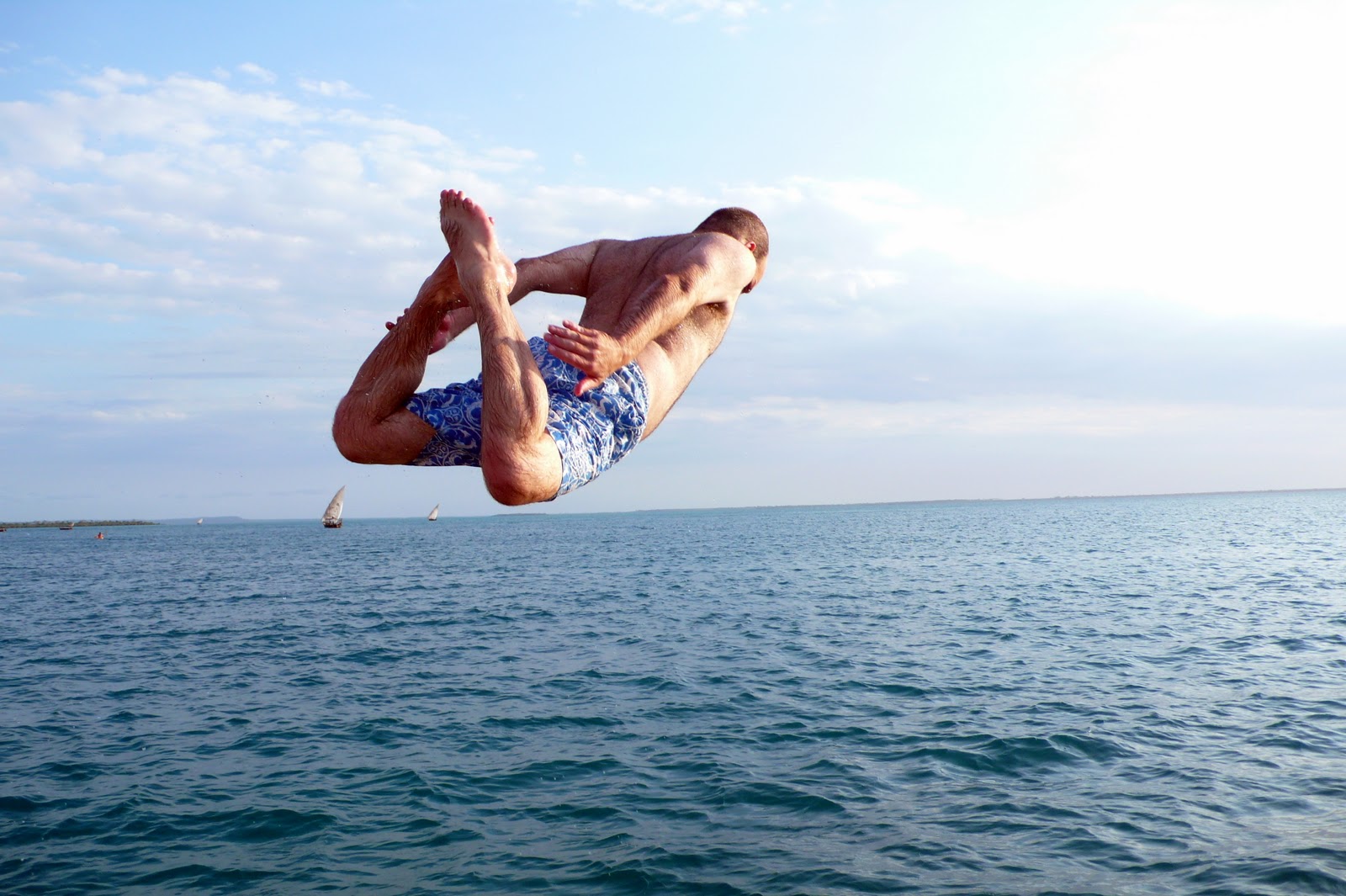
Cherry Bomb.


---

Photo Credit:
Andrei Sinioukov

Steve Bomb.

---

Photo Credit:
Andrei Sinioukov

December 13, 2010

Please spread the word.


As promised, I am writing a follow up post about the sale of sea shells not so close to the Indian Ocean sea shore in downtown Ukraine

I will begin with a loosely related passage from an exceptional book that I just finished reading Emergency Sex:

In Mombasa, Heidi meets James, a Masai “tribesman”. Following a romantic walk down the beach, she happens to notice that she is one of several solitary white women, all fairly young and attractive, with their own Masai tribesman. She casually remarks to herself, “Great, now I have turned into one of those rich white chicks who pick up poor, attractive men in third world countries for sex.”

In what appears to be a typical romantic ploy, James leads her onto a dhow, and following a short ride, they land directly onto a reef that she describes as filled with puddles that hold the most magnificent sea creatures – anemones, urchins, and starfish – with splashes of bright, living color everywhere – purple, red, blue, yellow – just lying about in shallow pools of water, waiting for the tide to come in and rescue them.

Tropical paradise at its finest, so it seems. Except that, the "curio trade" threatens to render this image obsolete. Borrowing from the "authority" in this area, I will explain.

The sale of shells and other organisms, mostly to tourists or shell collectors, is known as the curio trade. Shell collecting is a hobby with a long history. By the 17th century, seamen on trading ships were bringing home shells as curio. In the last 50 years, with increasing possibilities to travel, the purchase of shells has become a common practice for visitors returning home with samples of the bizarre and attractive sea life from remote corners of the world.

Throughout the Western Indian Ocean (and apparently Ukraine), road-side shell stands and shops are common, retailing mostly large, attractive and colorful gastropod shells, chunks of hard coral, turtle products or jewelry made from these. The business may not appear to be very large but the sheer volume of shells and other marine curios (that is to say, interesting and bizarre dead sea creatures) sold is staggering. The collection and export of shells and other marine curios is mostly unregulated, but indications are that hundreds of tones of cleaned shells have been exported over the last thirty years.

This practice holds damaging environmental consequences. The damage to shallow coastal habitats caused by turning over boulders or prizing coral off the seabed may have considerable local impact on the productivity of the area. The trade in dead coral and turtle products is banned in many countries outside of the Western Indian Ocean and tourists carrying these items back home run the risk of being fined and having the articles confiscated. The removal of these animals not only reduces the productivity of shallow coastal habitats but also the attractiveness of the habitats to tourists.

However, the book further warns, even collecting empty shells can be damaging for two reasons. Firstly, hermit crabs need gastropod shells. Without empty shells, hermit crabs may totally disappear from an area. The second reason is that empty shells serve as a hard substrate and are a vital component of the overall growth of the coral reef. Many organisms (corals and sponges) settle onto such hard surfaces. Collecting is therefore NOT RECOMMENDED, unless this activity is pursued to establish a properly identified and cataloged collection of shells, which will be available to specialists, and thus add to the knowledge of mollusks in an area.

While measures have been taken to restrict the collection of shells, for example by enforcing regulations banning collection inside marine protected areas (as a side note: Kenya's effective use of regulations stands in contrast to Tanzania; it is said that weak enforcement inside marine protected areas combined with loose enforcement of bans against dynamite fishing in Tanzania, make the reef a startling and defacto aqua "border" between the two countries), the general recommendation is to limit the sale and import of shells. Until there is a system of management which ensures the collection of species sold is not depleting the wild stocks or interfering with the balance of life in the shallow marine habitats of the region, these activities should not be encouraged.

DO NOT BUY CORALS OR OTHER CURIOS. Please spread the word.


July 5, 2010

Absolut Paradise.

After a 3+ hour's long sail, beating against the wind and getting thrown about in 3 meter ocean swells, we arrived to Sinda Marine Reserve Island. Once my sea sickness and nausea subsided, I deemed this place absolut paradise.
While we were only 6 persons in total, we brought enough stuff to support a group 3 times our size for a period of time well beyond the one night we camped on Sinda. It took approximately 13 round trips to ensure our precious cargo was delivered from on board Jammie Dodger to the island.
Following the arrival of our not so dry goods, we set up our homes for the night in the "perfect" spot.
And then we moved them. Apparently, even in paradise indecision is a terrible force to reckon with.
After lowering the sails on Jammie Dodger for the evening, we hoisted a new "sail" to claim the island as our own (for the night anyway).
We prepared the staging grounds for our evening campfire and meal.
After we collected firewood and ignited the coals, we were left with just enough time to explore the island before sunset.
As dark fell, we were greeted by the island welcoming committee.
The island was literally swarming with enormous rats. Seeing them scurry about before dark was testament to this fact. We were outnumbered by far, and they made it clear we were in their territory. They were uncomfortably bold, nibbling on our freshy caught fish and our toes alike. In the morning our tent looked like an island in a sea of rat footprints.


But we survived to tell the tale, and enjoyed a wonderfully relaxing and calm sail back home. Maybe this is indeed absolut paradise, despite the island full of man eating rats.

---

Photo Credit:

Man Eating Rat: http://little-people.blogspot.com/

July 2, 2010

Happy Fourth of July!

As I am reminded of all of the great American traditions around 4th of July celebrations, including fireworks, summertime bar bq foods, cold beers, beach trips, I feel happy that, perhaps minus the traditional fireworks, we will be able to recreate an equally spirited celebration of our own this weekend, despite the miles that separate us from the American shores. This weekend we are planning to sail to an uninhabited island off the coast of Dar es Salaam, where we will bar bq, swim, relax, and camp overnight.

We will sail away in Jammie Dodger, no, no, not the popular British biscuit, but rather our friends' zippy red sail boat with a fierce attitude. We managed to convince even the most tentative among our friends to join us in this adventure, despite the fact that there will be no sinks on the island for proper hand washing. Yes, that proved an almost insurmountable concern.

Barring that we survive to tell the tales of this adventure, I promise pictures next week. In the mean time, I have included some photos taken from our balcony of the sail boat parade that followed the opening of the regatta season for the Dar Yacht Club. Jammie Dodger is the boat with the loud, red spinnaker.

Happy 4th of July!

June 16, 2010

Adventure Seeking with a Twist.

One of the main reasons I travel is because of the people I get to meet along the way. Some, of course, are more impressionable than others. But there are a select few I have met along the way that have left me so inspired that I have been moved to search for more consequential meaning in my own life. This past weekend, I had the opportunity to meet two such people. And I would like to take the opportunity, in turn, to introduce them to you.

Their names are Gwyn and Ryan. Gwyn is from the UK. Ryan is from South Africa. Gwyn is driving Ryan home. Although this is hardly an ordinary drive. For starters, their journey begins in London and ends in Capetown. Their journey began on 11th October 2009. We met them nearly 8 months later on the south coast of Dar es Salaam, Tanzania at the bar of Mikadi Beach, a well known stop for overlanders in Africa. Gwyn was quite chatty and pumped with excitment for the pending U.S. v. England World Cup game, while Ryan, who appeared to be a bit shyer by nature, remained in the background reading the "Getting Started" Section of their Southern Africa Lonely Planet guide. We could not help but laugh at this fact, especially since 8 months into my year's long journey in Dar es Salaam, I still feel like I am "getting started." If only someone had penned a neat summary I could read to better equip me for this experience. 
Both Gwyn and Ryan share a sense of adventure. But their shared adventure is one with a unique twist. Namely, their overland route is being undertaken in a 1989 Toyota LandCruiser partially powered by solar technology. Gwyn’s keen interests in solar energy and development in Africa combined to create OverlandintheSun. The OverlandintheSun trip is an opportunity for Ryan to combine his journey home with a real world adventure that will aid in capitalizing on the potential of solar power and technology to bring benefits to some of the world's poorest communities. OverlandintheSun is raising money for SolarAid, a charity that fights global poverty and climate change by coordinating projects in rural Africa that bring solar power to schools, community centers, and health clinics. SolarAid augments their introduction of solar power technology by training beneficiaries to make and sell their own solar powered products and chargers.

The OverlandintheSun trip itself will be producing less CO2 than they would otherwise living in the UK. How you ask, can driving an energy inefficient car, over such a vast distance produce less CO2 than simply staying in the UK during that time?

Well, a trip of this kind takes a serious amount of preparation, and Gwyn diligently worked for over two years to make his dream a reality. But these two years of dedicated preparation work consisted not only of outfitting the vehicle to make it a place they could call home for the coming year, but also, reconfiguring the vehicle to make it partially fueled by solar energy. This has been achieved through the use of Solar Photovoltaics, a technology that has been around for 20 years, but is only now maturing and becoming economically viable. This technology will allow them to capitalize on the potential of the equitoral sun to fuel the vehicle's fans and water pump to keep them cool, the power steering to give them a helping hand, and the alternator to provide such amenities as lights, stereo, mobile satillite navigation system, as well as in-vehicle entertainment in the form of a solar powered kettle, solar powered mobile phones and personal computers and cameras, and the ultimate luxury - hot showers - via solar powered "heat" aka shower bags warmed in the sun.

While they recognize that by walking or biking they certainly would have consumed less fossil fuel burning energy (although perhaps more physical energy!), driving was in fact part of the mission. They were driven (no pun intended) to demonstrate to people in general and car manufacturers specifically the power of Solar Photovoltaics. While it is now widely accepted that using cars less, carpooling more, and driving more efficiently are all laudible goals, they realize that draconian policies restricting car usage is something no politician would dare to dream of and also changing the behavior of the "average Joe" is usually quite an impossible feat. Therefore, part of their mission is to take a bold stance in demonstrating the power of technology to help reduce the impact of climate change.

Many others with a similar sense of adventure have joined them along the way, as surely a trip of this magnitude would be impossible with two people alone, however we only had the pleasure of meeting Gwyn and Ryan.

Are you feeling inspired yet? Play your part in helping them arrive into Capetown and complete this dually inspirational journey.

Donate money for a good cause: Help OverlandintheSun reach their goal in raising money for Solar Aid.

Show your support on Facebook for OverlandintheSun:
http://www.facebook.com/pages/OverlandintheSun-London-to-Cape-Town-for-SolarAid/119064302706

June 4, 2010

Happy Birthday to Me!

Here's to indulging some of my favorite things as I celebrate my birthday this weekend. Hope everyone else enjoys the weekend as much as I am sure I will.

And P.S. Happy birthday wishes to Katie Logisz, who I met in the second grade and developed an immediate friendship with over the fact that we happened to share the same birthday - June 5!

And Happy birthday cheers to Tim Manchester, a curiously newfound, yet long-time friend based in Dar - best of luck to Jammie Dodger this weekend. Hip, hip, horray!

---
Photo Credits:

http://simplyrecipes.com/

http://www.annesage.com/

http://katearends.com/blog/2010/04/oceanside/?utm_source=feedburner&utm_medium=feed&utm_campaign=Feed%3A+katearends%2FDcwI+({+wit+%2B+delight+})&utm_content=Google+Reader