Showing posts with label beaches. Show all posts

June 10, 2011

Black and White.

---
Photo Credits: Andrei Sinioukov

March 18, 2011

Swimmers.

Our new house is big and accordingly there are a lot of big, empty white walls, begging to be filled with color, or something, anything. That was task #1 in the new house - finding a hammering and putting some things on the walls. Luckily, we had recently purchased two new pieces of art that we were keen to display.

The artist is Miguel Costales. He is Spanish. He has a charming accent and adorable dimples to match. He is humble and simple. He exudes a sense of coolness and confidence that kind of makes you want to be friends with him and chat for hours over a beer. 
Miguel is inspired by the beach and natural objects. The result is art that feels intimately connected to the Swahili Coast.
We bought two of his swimmers, but continue to be inspired by many of his other water colors and carved objects.
Dar-based folks, some of his pieces are still on sale at Makutano House, otherwise you can contact him directly and perhaps even visit his studio in Mbezi Beach, or else karibu kwetu to enjoy his art.

January 24, 2011

Circle of Life.

Recently, we had the incredible opportunity to watch a man-influenced miracle of nature. The birth of 76 green turtles on South Beach in Dar es Salaam.

This story begins a very, very long time ago. During the Cretaceous period between 135 – 70 million years ago, also known as the Age of Reptiles, the class Reptilia dominated the land and the sea. Today, only a few species of reptiles live in the sea, including snakes, crocodiles and turtles. All reptiles are cold-blooded and gain their heat from the sun, making the tropics a far more habitable and likely home for them.

Now here is where this story gets a little X-rated. Copulation takes place in the water, with the male mounting onto the female, gripping on to her shoulders with his front flippers, securing her posterior with his long tail. This position may last for over an hour during which time the female is the only one of the two who can actively swim and, from time to time, must carry both up to the surface to breathe. Occasionally, up to five males may climb on top of one female, although one the male on the bottom of the stack is actively mating. There is strength in numbers, I suppose.

A few weeks after mating, the female crawls up a sandy beach and digs a nest, into which she lays a clutch of eggs. Eggs are white, roundish, and smaller than a chicken's egg with a soft, leathery shell. The female excavates the nest with hind flippers, and covers the clutch with sand before returning to the sea. Some reptiles offer parental protection to the eggs and offspring, however turtles abandon their eggs once laid. This, of course, makes them highly vulnerable.

And here is where our involvement in this story begins. Between crawling out of the nest and reaching the sea, turtle hatchlings are vulnerable to predators such as birds and ghost crabs, as well as man. Once in the sea, turtles immediately aim for open waters, but even at sea most are eaten by fish and very few will survive. Only those that reach maturity (about 5% of any given hatch), which takes up to 30 years, return to land and complete their life cycle. Sea turtles have been exploited by man for thousands of years. Parts have been used to make combs and decorative ornaments. The eggs of turtles are a favorite food item, as is the flesh of adults. All turtle species are on the endangered species list, thus no international trade of turtles of their products is permitted. 

Given their precariously low survival rates, a local NGO - Sea Sense - conducts conservation activities (including paying local fishermen a small sum to identify and protect the clutch of eggs immediately after the female returns to the beach) to ensure that most of the sea turtles make it to the sea once they hatch, under normal circumstances 60% of the hatch would be eaten by predators on the beach. We ushered 100% of this hatch to safety, for the time being anyway...

Interestingly, the temperature of the nest determines the sex of the hatchlings. For example, in the nests of the green turtle, temperature above 27C result in females. Oh, also, the green turtle gets its name from the thin layer of mucus like fat that is between its shell and its body.

The limbs of sea turtles are flattened and modified into flippers, which needless to say are well adapted for swimming. Man, these little guys swam like hell once they reached the water from their hatching site. It was truly a site to behold.

January 19, 2011

January 14, 2011

Pure Swahili Coast.

Happy New Years greetings from the Swahili Coast.

Birthday Party Flashback.


South African vintage collection bottles consumed: too many to count
persons befriending the toilet post spirits imbibing: one
skinny dipping participants in the Indian Ocean: three
hospital bills for 3 malaria victims: very, very many monies
memories to last a lifetime: priceless

---
Source: Kristen Pfau via

December 14, 2010

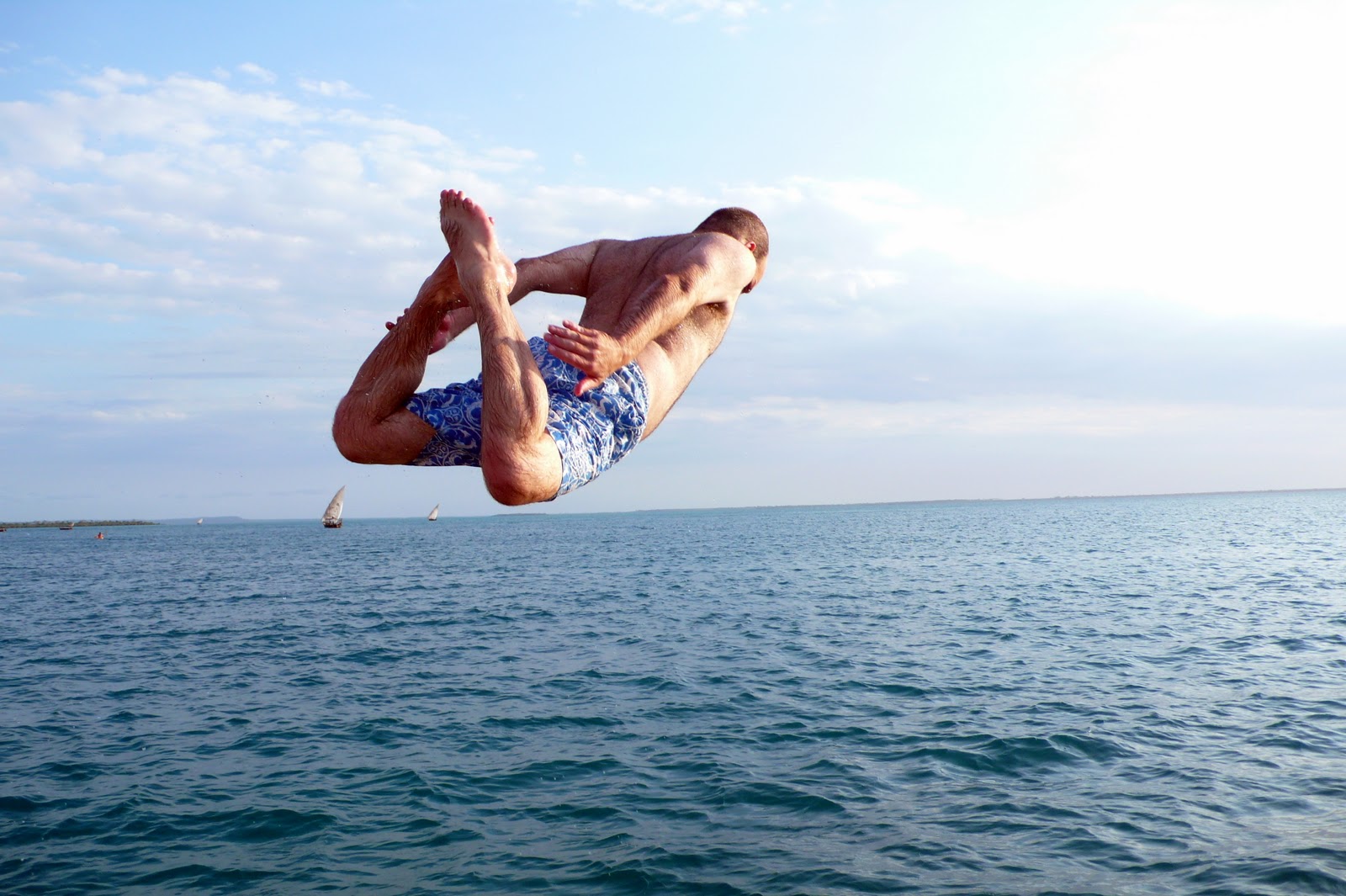
Cherry Bomb.


---

Photo Credit:
Andrei Sinioukov

Steve Bomb.

---

Photo Credit:
Andrei Sinioukov

December 13, 2010

Please spread the word.


As promised, I am writing a follow up post about the sale of sea shells not so close to the Indian Ocean sea shore in downtown Ukraine

I will begin with a loosely related passage from an exceptional book that I just finished reading Emergency Sex:

In Mombasa, Heidi meets James, a Masai “tribesman”. Following a romantic walk down the beach, she happens to notice that she is one of several solitary white women, all fairly young and attractive, with their own Masai tribesman. She casually remarks to herself, “Great, now I have turned into one of those rich white chicks who pick up poor, attractive men in third world countries for sex.”

In what appears to be a typical romantic ploy, James leads her onto a dhow, and following a short ride, they land directly onto a reef that she describes as filled with puddles that hold the most magnificent sea creatures – anemones, urchins, and starfish – with splashes of bright, living color everywhere – purple, red, blue, yellow – just lying about in shallow pools of water, waiting for the tide to come in and rescue them.

Tropical paradise at its finest, so it seems. Except that, the "curio trade" threatens to render this image obsolete. Borrowing from the "authority" in this area, I will explain.

The sale of shells and other organisms, mostly to tourists or shell collectors, is known as the curio trade. Shell collecting is a hobby with a long history. By the 17th century, seamen on trading ships were bringing home shells as curio. In the last 50 years, with increasing possibilities to travel, the purchase of shells has become a common practice for visitors returning home with samples of the bizarre and attractive sea life from remote corners of the world.

Throughout the Western Indian Ocean (and apparently Ukraine), road-side shell stands and shops are common, retailing mostly large, attractive and colorful gastropod shells, chunks of hard coral, turtle products or jewelry made from these. The business may not appear to be very large but the sheer volume of shells and other marine curios (that is to say, interesting and bizarre dead sea creatures) sold is staggering. The collection and export of shells and other marine curios is mostly unregulated, but indications are that hundreds of tones of cleaned shells have been exported over the last thirty years.

This practice holds damaging environmental consequences. The damage to shallow coastal habitats caused by turning over boulders or prizing coral off the seabed may have considerable local impact on the productivity of the area. The trade in dead coral and turtle products is banned in many countries outside of the Western Indian Ocean and tourists carrying these items back home run the risk of being fined and having the articles confiscated. The removal of these animals not only reduces the productivity of shallow coastal habitats but also the attractiveness of the habitats to tourists.

However, the book further warns, even collecting empty shells can be damaging for two reasons. Firstly, hermit crabs need gastropod shells. Without empty shells, hermit crabs may totally disappear from an area. The second reason is that empty shells serve as a hard substrate and are a vital component of the overall growth of the coral reef. Many organisms (corals and sponges) settle onto such hard surfaces. Collecting is therefore NOT RECOMMENDED, unless this activity is pursued to establish a properly identified and cataloged collection of shells, which will be available to specialists, and thus add to the knowledge of mollusks in an area.

While measures have been taken to restrict the collection of shells, for example by enforcing regulations banning collection inside marine protected areas (as a side note: Kenya's effective use of regulations stands in contrast to Tanzania; it is said that weak enforcement inside marine protected areas combined with loose enforcement of bans against dynamite fishing in Tanzania, make the reef a startling and defacto aqua "border" between the two countries), the general recommendation is to limit the sale and import of shells. Until there is a system of management which ensures the collection of species sold is not depleting the wild stocks or interfering with the balance of life in the shallow marine habitats of the region, these activities should not be encouraged.

DO NOT BUY CORALS OR OTHER CURIOS. Please spread the word.


December 8, 2010

The Far Reaches of the Indian Ocean.

In celebration of our "paper" anniversary, I gifted Andrei The Field Guide to the Sea Shores of East Africa. A major hit, this book has become a much referenced guide in our household. Described as ideal for beachcombers, snorkellers, and divers with an interest in natural history, this book usually accompanies us on all of our weekend adventures in Dar es Salaam. Little did we know how useful this reference guide could have proven on our trip to Kiev, Ukraine.

We were out exploring and stumble across this table of ocean treasures in the middle of downtown Kiev:
Most of these are species that we see on a daily basis in Dar. However, it is not usually the case that I am beachcombing in a full length fur coat.
Despite the smile on my face, this moment was quite disappointing. I will reserve my thoughts on how damaging the international shell trade is for a later post. In the mean time, however, I will take the opportunity to point out for Dar-based folks that all proceeds from the sale of this field guide go to a charitable trust that will help develop marine science (and conservation) in this geographic area. That alone makes the book worth buying.

November 17, 2010

Global Coconut Threat.

I knew that tropical paradise had its pitfalls, so to speak, but I did not realize the high level threat it poses. Apparently, falling coconuts are the world's latest, greatest threat.
Our favorite beach bar acknowledges such a threat, but politely declines any liability.
But one nation on earth was not prepared to take any risk with this threat. Ahead of President Obama's recent visit to India, officials from Mumbai undertook extraordinary measures to protect Obama from such global security risks and dutifully set about removing all coconuts which could potentially have fallen on his head during his recent visit. Phew.


--
References:

http://www.bbc.co.uk/news/world-south-asia-11684382

October 28, 2010

Inspired Fashion.

I have spoken in the past about the importance of the kanga and the kitenge cloths as a centerpiece of Tanzanian dress. One of my favorite pasttimes here continues to be digging through piles and piles of kangas or kitenges in local markets and finding new and inspiring designs, patterns, and sayings. it provides a nice afternoon distraction.
While strong on cultural interest in these traditional cloths, I find that I am short on inspiration to actually do anything useful with them, and as a result, I have piles and piles of kangas and kitenges sitting in my closet not being put to any productive use. As a marked contrast to my own creative design limitations, I am highly impressed with those that can create fashions suitable for Western audiences out of something so basic and traditional. One recent example proved blog-worthy.

Under the brand name, Ole Africa!, a friend of mine has worked in collaboration with a local tailor to create a custom clothing line from kangas and kitenges. The result is wildly impressive.
For more information head here. To place your custom order ahead of the holidays contact her: oleafricadress@gmail.com.

October 16, 2010

Dream Machine.

This one is for you. You know who you are.

Listen and download here.
Cant get enough, look here.
I cant either.

October 12, 2010

Thoughts on Polygamy.

A recent attention-grabbing headline in African news on CNN read, "Kenyan polygamist with 100 wives dies." According to the Kenya Broadcasting Corporation, Ancentus Akuku, known for marrying 100 wives and reportedly had over 160 children, died at the ripe age of 90"something". This notorious Kenyan man was nicknamed "Danger" because of his alleged charm and ability to woo women. His family was so large, he built a church and a school for them in the western town of Kisumu, and Akuku himself admitted that the size of his extended family made it impossible to keep track of them. Akuku married his first wife in 1939 and his last wife in 1992, and had reportedly divorced as many as 30 wives during this time.


Although polygamy was the norm in Kenya during Akuku's time, the article cites that this practice has died out over the years. To whatever extent that claim is true in Kenya, this practice decidedly persists in Tanzania. We have seem many, many examples of polygamous marriages during our time here. Not only does polygamy continue to happen on an informal basis, it is actually sanctioned by Tanzanian law. Upon registration, a marriage license must be filed according to one of three classifications: polygamous, potentially polygamous, or monogamous. Incidentally any declared status can be "converted" to polygamous or monogamous by joint declaration at any time. As it exists, polygamous relationships are permitted only with the consent of the first wife, in fact maintenance of the other wives becomes the first wife's duty in cases where the husband is incapacitated or otherwise unable to earn a living. Given that Islamic law allows for men to take up to four wives, it is presumed that all Muslim marriages are polygamous or potentially polygamous unless proved otherwise, and Christian marriages are the reverse. A man is only allowed to take a second or third or even fourth wife provided that he can "afford" to support them, therefore polygamy is often a defacto status symbol, indicating great wealth.


This past weekend we were hanging out in South Beach with a newfound friend, Shannon, otherwise known as The Kristen Replacement, and were greeted with swarming numbers of Pakistani naval officers on shore leave. They approached Andrei in a steadfast manner and invited him for a friendly chat by the poolside. He got up to join them alone. Shannon and I were more than content to continue drinking our beers by the bar. No no, they beckoned, everybody should come. By the poolside Andrei explained, these are both my wives - Wife #1 and Wife #2. This statement received barely scant notice and jovial conversation continued. Once their rudimentary English skills had run their course, they asked to take a group picture with us and then politely excused themselves for further exploration. As they walked away one man looked back and with a wink and nod of the head he remarked, "You are a very lucky man to have two wives."


And so it seems, sometimes the path of least resistance, in terms of explaining away circumstances, is the most amenable and easily understood mode of communication, especially when working across such varied and value laden cultural norms.

---
References:

http://edition.cnn.com/2010/WORLD/africa/10/07/kenya.polygamist.100.wives/index.html?hpt=T2


http://www.law.emory.edu/ifl/legal/tanzania.htm

October 8, 2010

The Kristen Replacement.

Back by Popular Demand.

Following a blogging break in which I was inexplicably busy with tropical paradise and all of its pitfalls, I am back. Apologies for such an unwarranted break.

September 16, 2010

Driftwood.

 
I am asked almost every day by a number of people what our plans are, more specifically, when are you and Andrei planning to return to the United States? The reality is our plans will probably not entail an immediate return to the U.S., at least not as our next best course of action. It makes sense professionally for us to both continue to invest in time spent living and working in the field, where the more interesting work opportunities also happen to reside. A decision to stay in the field may provide us with a comparative advantage in this notoriously competitive field.
But this simple and logical explanation for our locational decisions, does not mean that I do not experience moments of doubt about the lack of formative plans on the near horizon, especially as my year long visa will be expiring in the next couple of weeks. In fact, I would be remiss to not admit that awaiting responses on career-related news and decisions that are not within our control, makes me feel wholly out of control.
In an attempt to gather personal clarity in the face of looming professional uncertainty, I found myself soulfully clinging to the words of this song today...I would like to be like driftwood, floating with the flow...being taken for a ride...