Showing posts with label water and sanitation. Show all posts
Showing posts with label water and sanitation. Show all posts
February 1, 2011

July 8, 2010
My heart Swells with Pride.
The city we now call home recently ranked 12th out of 25 on a quite impressive list.
 This Forbes list ranked the top 25 most dirty cities in the world. Dar landed itself the #12 spot both because of its souring population growth, which adds undue stress to the city's sanitation programs and also due to the fact that solid waste from the city enters directly into the Msimbazi River, which contributes widely to the spread of infectious diseases among Dar residents. You can scope out our competition here.
This list was developed based on the Mercer Human Resource Consulting's 2007 Health and Sanitation Rankings as part of their 2007 Quality of Life Report. This Report ranked 215 cities worldwide according to the following parameters: levels of air pollution, waste management, water potability, hospital services, medical supplies, and the presence of infectious disease.
All joking aside, the realities for residents of most of these cities can be very harsh, in places where "black plumes of smoke, acid rain and free-flowing sewage are part of everyday life." Also, such conditions are almost guaranteed to bear negative affects on the population's health and by extension life expectancy. Not so surprisingly, life expectancy here is extremely low. The UN reports that life expectancy for men is 55 years, for women 56 years, while USAID estimates life expectancy to be a bit lower at 48 years (due in part of the ravaging effects of HIV/AIDS and malaria). In either case, these statistics paint a dire picture, and anecdotally, I can attest to the fact that it is a rare sight to see elderly people around here. I can only imagine the horrendous conditions and associated consequences for the health of the residents of the cities unfortunate enough to rank ahead of Dar es Salaam on this list.
---
References:
http://www.forbes.com/2008/02/26/pollution-baku-oil-biz-logistics-cx_tl_0226dirtycities.html
http://www.istafrica.com/general_information/student_guide/facts.htm
http://news.bbc.co.uk/2/hi/europe/country_profiles/1072330.stm
http://www.usaid.gov/locations/sub-saharan_africa/countries/tanzania/index.html

This list was developed based on the Mercer Human Resource Consulting's 2007 Health and Sanitation Rankings as part of their 2007 Quality of Life Report. This Report ranked 215 cities worldwide according to the following parameters: levels of air pollution, waste management, water potability, hospital services, medical supplies, and the presence of infectious disease.
All joking aside, the realities for residents of most of these cities can be very harsh, in places where "black plumes of smoke, acid rain and free-flowing sewage are part of everyday life." Also, such conditions are almost guaranteed to bear negative affects on the population's health and by extension life expectancy. Not so surprisingly, life expectancy here is extremely low. The UN reports that life expectancy for men is 55 years, for women 56 years, while USAID estimates life expectancy to be a bit lower at 48 years (due in part of the ravaging effects of HIV/AIDS and malaria). In either case, these statistics paint a dire picture, and anecdotally, I can attest to the fact that it is a rare sight to see elderly people around here. I can only imagine the horrendous conditions and associated consequences for the health of the residents of the cities unfortunate enough to rank ahead of Dar es Salaam on this list.
---
References:
http://www.forbes.com/2008/02/26/pollution-baku-oil-biz-logistics-cx_tl_0226dirtycities.html
http://www.istafrica.com/general_information/student_guide/facts.htm
http://news.bbc.co.uk/2/hi/europe/country_profiles/1072330.stm
http://www.usaid.gov/locations/sub-saharan_africa/countries/tanzania/index.html
June 4, 2010
The perfect balance.
The "perfect" balance. Is this even possible?
I recently reconnected with a friend who I had long since fallen out of touch with. She offered the following by means of explanation, "I have allowed myself to spend the past several months wrapped up in a new relationship - it has been fantastic, and new. I am still working on how to balance him with needing my own time, time with my friends, and time with my family. To be honest, I feel I have not done the greatest job at making sure that I am as connected as I normally prefer to be with all of my friends. I am hoping that as I seek to reconnect and rebalance in the upcoming months that my friends understand." Surely I understand. In fact, isn't a sense of balance the essence of what we are all seeking in life? Perhaps it is easier said than done.
I recently discovered Elements of Style - an inspirational blog written by Erin Gates, an interior and fashion stylist based in Boston.
 She is cute as a button. Her blog is even better. She introduces topics related to fashion, interior design and pop culture, with a sense of charm and sophistication, but perhaps more importantly, with a welcome sense of humor, making these often high end topics highly accessible to everyone. I am not alone in my praise for her, she received accolades from the Washington Post, as one of the “Top Ten Design Blogs of 2008." She admittedly has a fabulous job, designing homes, being her own boss, writing her blog, penning a column in a local Boston magazine and doing some fashion styling on the side.
Despite all of this, she writes, "I know I have it pretty good. Yet, there are days when it doesn’t feel like it’s enough. Or that its right. Or that there might be more for me - more depth, more meaning, more something. I think constantly about all the things I want to try and do and be and it’s dizzying to say the least. I don’t feel cursed by the urge to expand my horizons, but I do feel pressure and the head spinning speed of passing time as I hurdle into my thirties. I wonder about doing other things with my life; other things that interest me greatly like writing a book, focusing on painting again, opening a store, opening a bakery, teaching yoga, teaching art or giving into the rumored bliss of motherhood. The thing is, I know in my heart I can try all these things, and some of them might be failures. Failure is something I historically feared more intensely than anything else in this world and I’m starting to find I am less and less afraid of it. But it is hard to let go of old habits. My worst one is trying to be what everyone else wants me to be (or what I think everyone else wants me to be). Being yourself and owning it - the good and the bad - is a really tough thing to do, but so worth the fight. I have accepted that I will never be (and probably shouldn’t be) a doctor (despite my penchant for self-diagnosing on WebMD), a business exec, a talk show host, a lawyer, a shrink, a “save the world” type, a vegetarian, an actress, a blonde. Other people were born to be those things, I wasn’t. Following your passion and bliss won’t always bring you fame and fortune, but it might just bring you a little peace of mind."
A self-described, "grass is greener type of person", she concludes, "Now, back to the shallow stuff…. :)"
As some of you may have noticed, I have spent a great deal of blog space focused on home design and fashion, all the while sharing stories on the realities and challenges of living in what is one of the poorest countries in the world. Perhaps my musings on home design and fashion are entirely at odds with my current environment, or perhaps I am subconsciously yearning for these things, otherwise unavailable to me here? But maybe at the end of the day, these seemingly disconnected streams of thought represent a balanced picture of my wide ranging interests. Yes, seeking meaningful, worthwhile work is important to me, and I have squarely placed myself on a career track dedicated to advancing the interests and realities of some of the world's poorest, but my interests admittedly delve far beyond that.
While Erin was quick to call her design-focused profession "shallow," I on the other hand do not believe that design and aesthetics are mutually incompatible with helping the world's poor. In fact there is a growing movement of designers dedicating their talent and energy to developing low-cost solutions for those not traditionally served by professional designers. Design for the Other 90% represents a collection of entrepreneurs, engineers, students, professors, and architects from around the globe coming together to devise cost-effective ways to improve access to basic services, including water, food, energy, education, healthcare, revenue-generating activities, and affordable transportation. This movement demonstrates how design can be a dynamic force in saving and transforming lives, at home and around the world. And so it seems, someone in the higher end fashion and design world can unknowingly provide the inspiration to bring life saving design and technologies to the world's poor and traditionally underserved.
For those of you in the DC area with an interest in balancing "form" and "function," I highly recommend checking out the Design for the Other 90% exhibit at the National Geographic Museum at 1145 17th Street NW. This exhibit will be up through September 6th of this year. For others not in the DC area, the book is available for purchase here.
 ---
---
References:
http://events.nationalgeographic.com/events/exhibits/2010/04/28/design-other-90/
http://other90.cooperhewitt.org/resources/
I recently reconnected with a friend who I had long since fallen out of touch with. She offered the following by means of explanation, "I have allowed myself to spend the past several months wrapped up in a new relationship - it has been fantastic, and new. I am still working on how to balance him with needing my own time, time with my friends, and time with my family. To be honest, I feel I have not done the greatest job at making sure that I am as connected as I normally prefer to be with all of my friends. I am hoping that as I seek to reconnect and rebalance in the upcoming months that my friends understand." Surely I understand. In fact, isn't a sense of balance the essence of what we are all seeking in life? Perhaps it is easier said than done.
I recently discovered Elements of Style - an inspirational blog written by Erin Gates, an interior and fashion stylist based in Boston.

Despite all of this, she writes, "I know I have it pretty good. Yet, there are days when it doesn’t feel like it’s enough. Or that its right. Or that there might be more for me - more depth, more meaning, more something. I think constantly about all the things I want to try and do and be and it’s dizzying to say the least. I don’t feel cursed by the urge to expand my horizons, but I do feel pressure and the head spinning speed of passing time as I hurdle into my thirties. I wonder about doing other things with my life; other things that interest me greatly like writing a book, focusing on painting again, opening a store, opening a bakery, teaching yoga, teaching art or giving into the rumored bliss of motherhood. The thing is, I know in my heart I can try all these things, and some of them might be failures. Failure is something I historically feared more intensely than anything else in this world and I’m starting to find I am less and less afraid of it. But it is hard to let go of old habits. My worst one is trying to be what everyone else wants me to be (or what I think everyone else wants me to be). Being yourself and owning it - the good and the bad - is a really tough thing to do, but so worth the fight. I have accepted that I will never be (and probably shouldn’t be) a doctor (despite my penchant for self-diagnosing on WebMD), a business exec, a talk show host, a lawyer, a shrink, a “save the world” type, a vegetarian, an actress, a blonde. Other people were born to be those things, I wasn’t. Following your passion and bliss won’t always bring you fame and fortune, but it might just bring you a little peace of mind."
A self-described, "grass is greener type of person", she concludes, "Now, back to the shallow stuff…. :)"
As some of you may have noticed, I have spent a great deal of blog space focused on home design and fashion, all the while sharing stories on the realities and challenges of living in what is one of the poorest countries in the world. Perhaps my musings on home design and fashion are entirely at odds with my current environment, or perhaps I am subconsciously yearning for these things, otherwise unavailable to me here? But maybe at the end of the day, these seemingly disconnected streams of thought represent a balanced picture of my wide ranging interests. Yes, seeking meaningful, worthwhile work is important to me, and I have squarely placed myself on a career track dedicated to advancing the interests and realities of some of the world's poorest, but my interests admittedly delve far beyond that.
While Erin was quick to call her design-focused profession "shallow," I on the other hand do not believe that design and aesthetics are mutually incompatible with helping the world's poor. In fact there is a growing movement of designers dedicating their talent and energy to developing low-cost solutions for those not traditionally served by professional designers. Design for the Other 90% represents a collection of entrepreneurs, engineers, students, professors, and architects from around the globe coming together to devise cost-effective ways to improve access to basic services, including water, food, energy, education, healthcare, revenue-generating activities, and affordable transportation. This movement demonstrates how design can be a dynamic force in saving and transforming lives, at home and around the world. And so it seems, someone in the higher end fashion and design world can unknowingly provide the inspiration to bring life saving design and technologies to the world's poor and traditionally underserved.

References:
http://events.nationalgeographic.com/events/exhibits/2010/04/28/design-other-90/
http://other90.cooperhewitt.org/resources/
April 15, 2010
Umbrellas, etc.
Our trip to Thailand proved wonderfully restive and restorative.
 (Photo credit: Andrei Sinioukov)
We spent our last weekend in Thailand on Koh Samet island about 4 hours outside of Bangkok surrounded by beach umbrellas.


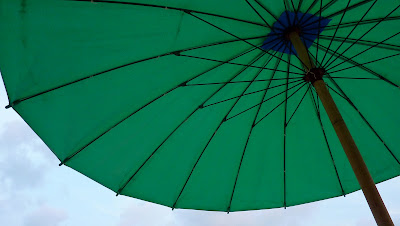


And we have returned to Dar es Salaam to be surrounded by another variety of umbrellas altogether. It is officially rainy season here, the season for the so-called "big rains". The name captures it all.


The last picture is perhaps the most indicative of what the rainy season means for the average Tanzanian. Even within urban areas of Tanzania, including Dar es Salaam, only 79% of people have access to clean and safe water sources, which is actually a marked improvement compared to their rural counterparts, where only 45% of rural inhabitants have access to clean and safe water sources. During the dry season, the majority of women around Tanzania have to walk more than one kilometer to fetch drinking water for their household. The rainy seasons brings a welcome reprieve from this grueling, daily task, when rain water can be collected for household use right outside their front door step.
Watching a downpour from our balcony is like watching time stand still. Movement on the streets below comes to a roaring halt, as everyone waits for the rain to pass to resume their daily goings-about. The only trace of activity during a rain storm is the methodical arrangements of buckets under down spouts to collect the rain waters for household use.
The sound and smell of a big down pour are almost intoxicating. The sound can be deafening at times, rendering conversation impossible on our balcony. The smell is clean, pure, fresh. Before witnessing several of these African rainstorms, I had no idea rain carried such a distinct smell.
---
Source Referenced:
WaterAid Report, 2008
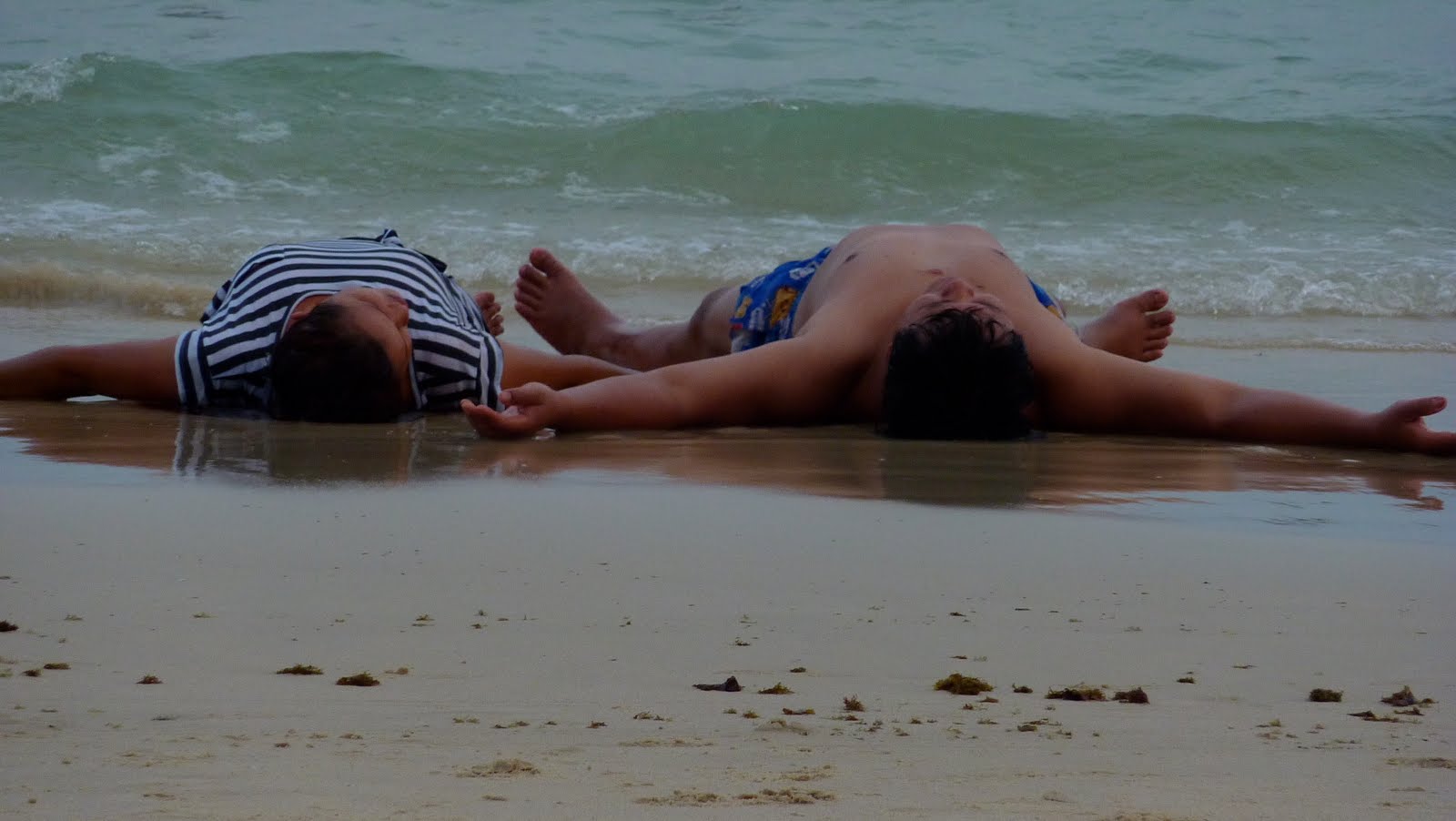
We spent our last weekend in Thailand on Koh Samet island about 4 hours outside of Bangkok surrounded by beach umbrellas.


And we have returned to Dar es Salaam to be surrounded by another variety of umbrellas altogether. It is officially rainy season here, the season for the so-called "big rains". The name captures it all.


(Photo credit: Andrei Sinioukov)


(Photo credit: Andrei Sinioukov)

The last picture is perhaps the most indicative of what the rainy season means for the average Tanzanian. Even within urban areas of Tanzania, including Dar es Salaam, only 79% of people have access to clean and safe water sources, which is actually a marked improvement compared to their rural counterparts, where only 45% of rural inhabitants have access to clean and safe water sources. During the dry season, the majority of women around Tanzania have to walk more than one kilometer to fetch drinking water for their household. The rainy seasons brings a welcome reprieve from this grueling, daily task, when rain water can be collected for household use right outside their front door step.
Watching a downpour from our balcony is like watching time stand still. Movement on the streets below comes to a roaring halt, as everyone waits for the rain to pass to resume their daily goings-about. The only trace of activity during a rain storm is the methodical arrangements of buckets under down spouts to collect the rain waters for household use.
The sound and smell of a big down pour are almost intoxicating. The sound can be deafening at times, rendering conversation impossible on our balcony. The smell is clean, pure, fresh. Before witnessing several of these African rainstorms, I had no idea rain carried such a distinct smell.
---
Source Referenced:
WaterAid Report, 2008
Subscribe to:
Posts (Atom)